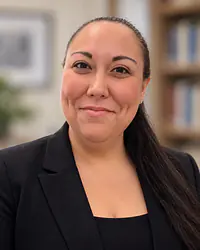


I am a political scientist who studies how political institutions structure representation and distribute political power in American democracy. My research sits at the intersection of voting rights and election law, political behavior, and racial politics, and combines substantive questions about democratic power with methodological work in measurement, research design, and computational social science.
My current research includes two major empirical programs. The first examines voting rights, redistricting, and election law, with particular attention to the evidentiary problems that arise when courts and political scientists must distinguish racial from political explanations for electoral institutions and state action. I am interested in how changing voting-rights doctrine reshapes the questions political scientists must answer, what comparisons and counterfactuals are necessary to evaluate competing explanations, and how quantitative and computational methods can contribute to the study of representation and electoral institutions.
A second research program examines political divergence within the Latino electorate across the 2016, 2020, and 2024 presidential elections. Using interpretable machine learning and survey data, I study which characteristics most distinguish competing electoral choices, how those relationships change across elections and groups, and what these patterns reveal about partisan alignment and the changing structure of political coalitions. This work uses computational methods not simply for prediction, but to make complex patterns of political behavior more interpretable and theoretically informative.
A broader theoretical strand of my research examines the relationship between race, political membership, and democratic power. My book project, Herrenvolk Democracy: Race, Exclusion, and the American Political Order, examines how American democratic institutions developed alongside durable forms of racial exclusion and unequal political membership. Related work develops new approaches to conceptualizing and measuring power sharing and democratic inclusion across groups.
Across these projects, I am especially interested in how difficult political concepts can be translated into empirical tests. My methodological work spans concept formation, measurement, counterfactual reasoning, predictive modeling, and interpretable machine learning, with a particular interest in using computational methods to identify underlying structure rather than treating prediction as an end in itself. My research also draws on survey analysis and historical and institutional evidence.
Background
I was born and raised on Tucson’s South Side and began my college education at Pima Community College before transferring to the University of Arizona, where I earned my BA in Government and Public Policy, magna cum laude, and received the Robie Gold Medal. I later earned my PhD in Political Science from the University of Notre Dame, where I was a National Science Foundation Graduate Research Fellow.
Before joining the Charles Hamilton Houston Institute for Race & Justice at Harvard Law School, I was a Postdoctoral Fellow at the University of Notre Dame’s Institute for Latino Studies.